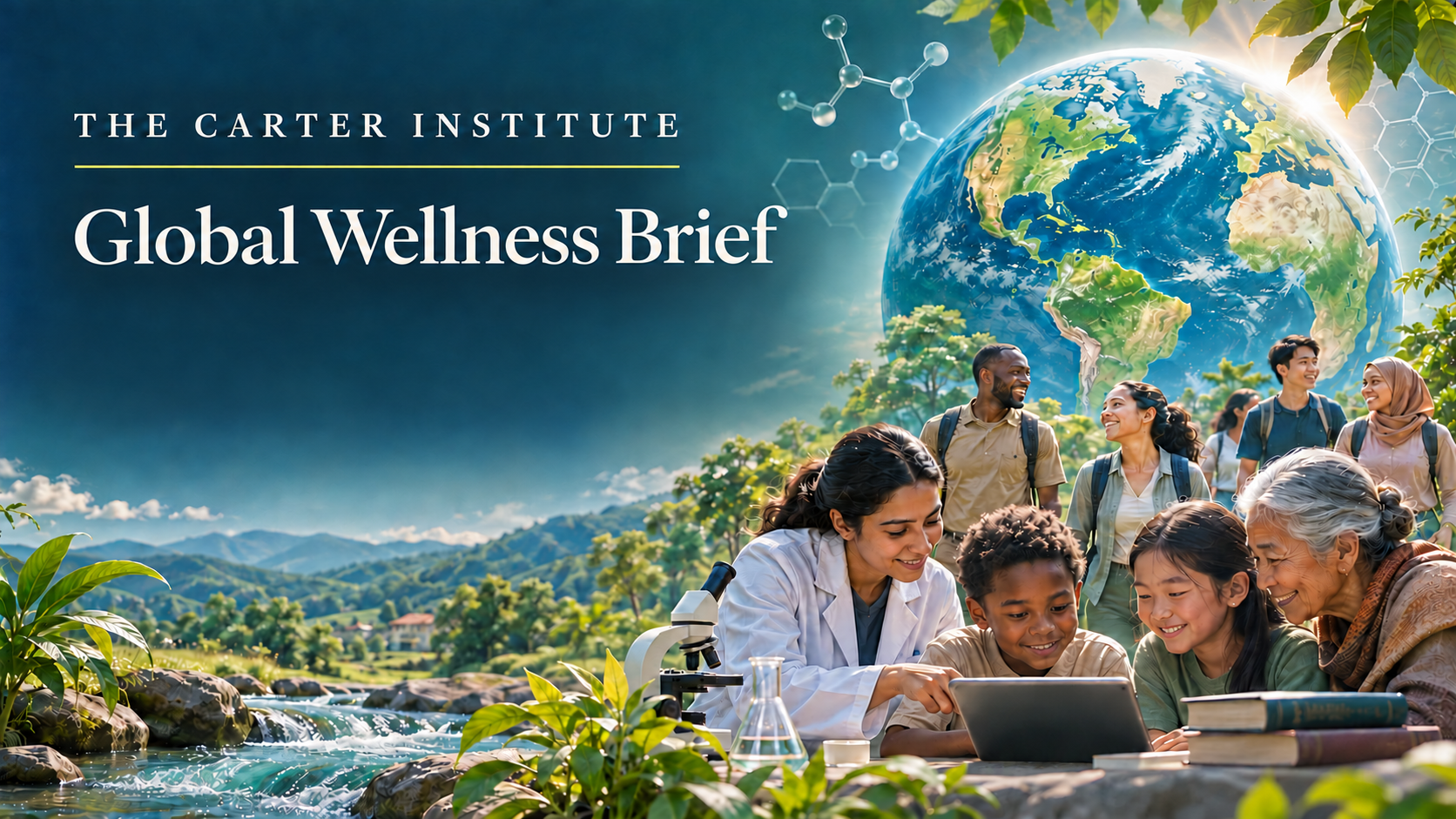
The Carter Institute’s Global Wellness Brief explores consequential developments shaping the health and well-being of people worldwide. Each weekly update highlights credible public-health initiatives, meaningful research, emerging wellness trends, and innovative educational programs—explaining what changed, why it matters, and how the findings can inform everyday understanding and action.
Grounded in reliable sources, the brief distinguishes established evidence from preliminary findings and offers practical educational ideas for children and adults. Our goal is to make global wellness knowledge accessible, encourage informed dialogue, and inspire healthier communities.
Covering Developments October 19–25
1. Lower malaria vaccine prices could expand childhood protection
What changed: On October 22, UNICEF and Gavi announced an agreement to reduce the RTS,S/AS01 vaccine price by approximately 40%, potentially saving $50 million during 2027–2029.
Why it matters: Those savings could fund full vaccination courses for up to one million additional children, or support other childhood vaccines. The lower price is expected in early 2027, subject to regulatory and manufacturing milestones; the additional protection is projected, not yet achieved. Source: UNICEF. unicef.org
2. A new global framework puts children and pregnancy at the center of heat preparedness
What changed: On October 21, WHO, WMO, UNICEF, and UNFPA launched priority indicators for tracking heat’s health impacts on pregnant women, newborns, and children.
Why it matters: Shared measurements can help countries identify risks and strengthen responses. This is a monitoring and preparedness initiative; evidence of its implementation and outcomes will come later. Source: WHO. who.int
3. Music fandom offers a practical model for public-health education
What changed: In an October 23 update following a Seoul meeting, WHO reported results from its blood-donation collaboration with K-pop group ENHYPEN. The broader campaign received over 9,000 pledges across 177 countries, including more than 3,250 from people identifying as the group’s fans.
Why it matters: Familiar cultural voices can connect health education with community participation. However, pledges and campaign reach do not establish how many completed donations occurred or whether long-term donor retention improved. Source: WHO. who.int
4. Diagnostic access receives renewed attention—but delivery remains the test
What changed: An October 22 WHO update outlined the Global Diagnostics Coalition’s push for community-centered diagnostic services, stronger national priorities, and better links between testing and treatment, following discussions at the World Health Summit earlier this month.
Why it matters: WHO reports that 47% of people lack access to timely, reliable diagnosis. The update signals coordination and advocacy rather than a newly funded rollout or demonstrated improvement in access. Source: WHO. who.int
Leave a Reply