
Author: Jace Carter
-
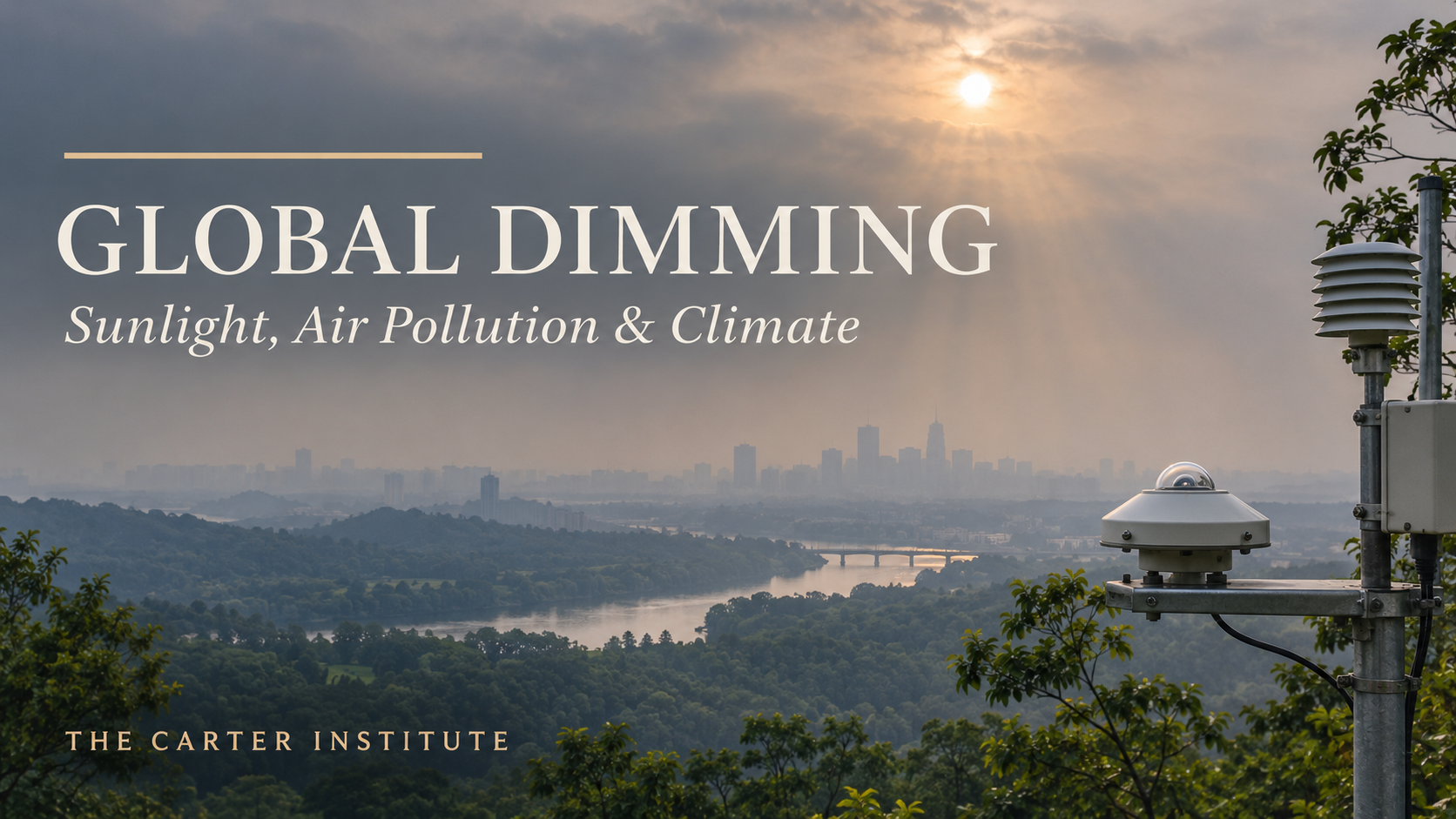
Why Sunlight, Air Pollution, and Climate Policy Belong in the Same Conversation The Carter Institute | Environment, Research, and Global Wellness Sunlight powers the water cycle, supports food production, and provides energy for ecosystems and communities. Yet the amount reaching Earth’s surface can change even when the Sun itself is not the cause. Airborne particles…
-

Global Economic Brief 11.12.2026
Developments released November 4–11 Four developments offer strong educational material this week, particularly on household purchasing power, borrowing costs, and the interpretation of jobs data. 1. Global food commodity prices eased—but remained higher than a year ago On November 6, FAO reported that its international food commodity price index fell 1.2% in October, while remaining…
-

Honoring American Veterans Around the World
Behind every uniform is a person: a daughter or son, a parent, a spouse, a partner, a friend, a neighbor. Behind every period of service are experiences that can shape a lifetime. This Veterans Day, the Carter Institute offers gratitude to those who have served in the United States Armed Forces and extends a spirit…
-
Global Conservation Brief 11.10.2026
Developments reported November 3–10 This week’s strongest educational theme is how conservation moves from promises to measurable action. Four developments offer useful material; none establishes a new, large-scale biodiversity recovery this week. 1. A new framework connects local conservation work to global extinction risk What changed: On November 4, IUCN and Newcastle University described a…
-
Global Wellness Brief 11.09.26
Developments reported November 2–8 1. WHO quantifies the health benefits of six climate actions What changed: On November 4, WHO released an analysis estimating that expanding heat warnings, resilient drinking-water services, sanitation, handwashing facilities, cleaner household energy, and efficient fossil-fuel pricing could prevent 1.6 million deaths annually. Why it matters: It connects environmental policy with…