
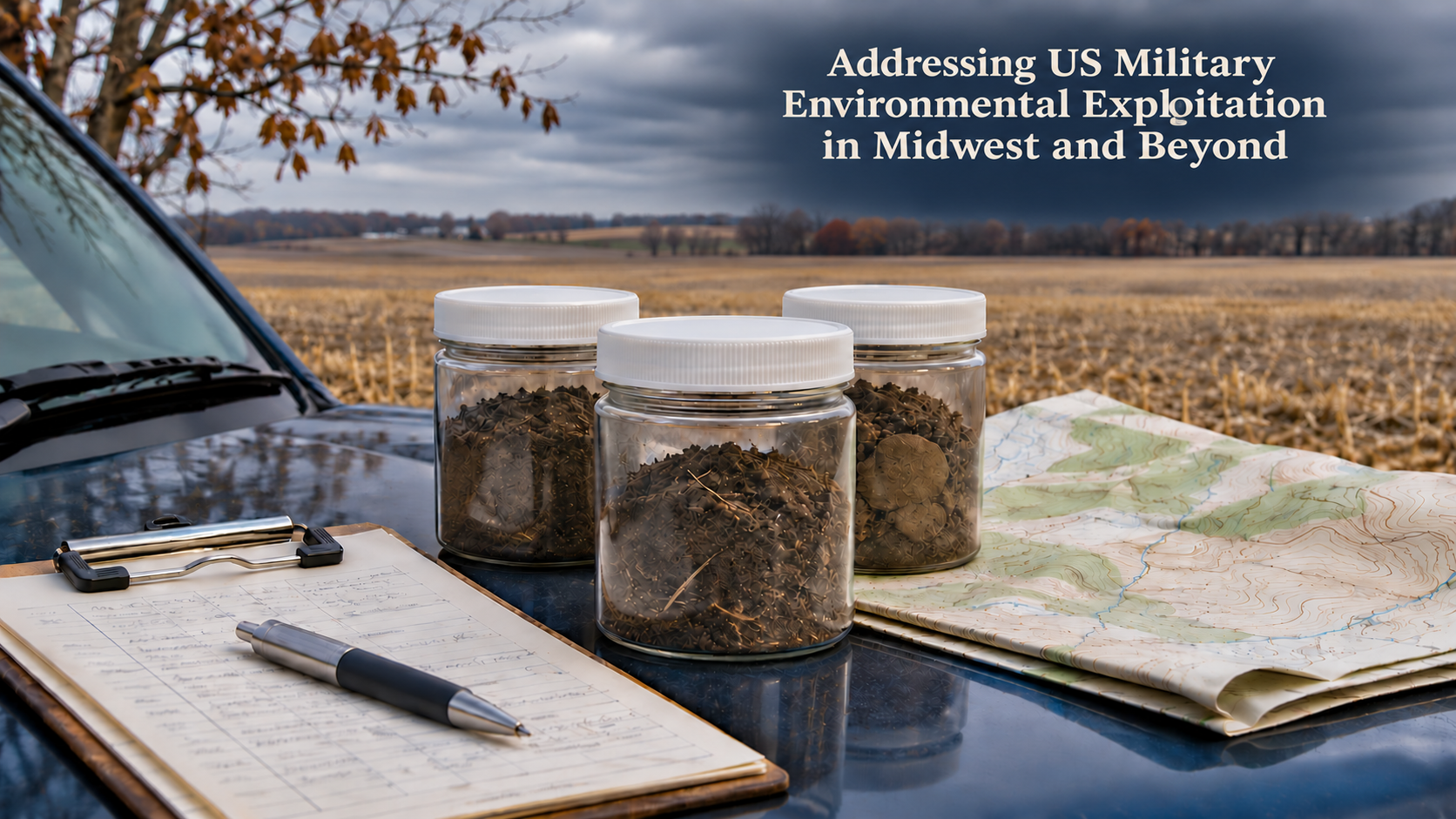
On November 25, the U.S. Army carried out a controlled detonation of degraded lead azide at the Iowa Army Ammunition Plant in Middletown. The Army said the deteriorated material had become so sensitive that moving it or leaving it in place risked an uncontrolled explosion. An hour after the blast, the U.S. Environmental Protection Agency reported that its real-time air monitors had detected no airborne lead. That early result is encouraging but most likely premature in determining environmental degradation and impact on population. Determining whether lead settled on nearby property requires post-blast sampling of soil, surface dust and water, compared with conditions before the blast. Army announcement · EPA air monitoring update
How a brief event could leave a decades-long problem
Lead is a persistent metal. If enough lead-containing dust settled on yards, playgrounds or farm soil, it could remain there for decades unless the contamination is removed or safely contained. Wind and soil disturbance can put contaminated dust back into the air. People and pets can track soil indoors. Runoff can move contaminated sediment into ditches and streams. The implications for farms depend on where particles landed and in what concentrations, including whether they reached areas used for grazing, growing food or storing feed. Those are questions for testing. As of November 25, the reported air readings alone cannot establish whether the detonation will cause lasting off-site contamination or health effects. Iowa HHS lead exposure guidance · CDC guidance on lead in soil
Children are especially vulnerable because their brains are developing and they often put dusty hands or objects in their mouths. CDC says no safe blood lead level in children has been identified. Exposure can affect learning and attention, with consequences that can extend into adulthood. People who are pregnant also warrant particular attention. If testing identifies new contamination, reducing further exposure and providing follow-up care are as important as documenting the initial release. CDC lead prevention guidance · Iowa HHS testing guidance
Why officials proceeded and what they owe the public
EPA issued an emergency hazardous-waste permit authorizing in-place detonation. The Iowa Environmental Council and the Iowa chapter of the Sierra Club challenged the permit. A federal appeals court temporarily stayed it and later lifted the stay. Federal agencies said planning had been underway since March. The time between planning and public notice deserves scrutiny, as does the period before the material deteriorated. When did inspections first identify a problem? When were local emergency managers, schools and producers informed? What options were available at each stage, and who decided when they were no longer viable? EPA emergency permit notice · Federal agencies’ November 20 statement · Iowa Public Radio’s court coverage
An independent review should examine two different decisions. First, what could the Army have done earlier, when stabilization, contained treatment or transport to a permitted facility may have been feasible? Second, once the Army judged the material too unstable to move, what controls or timing options could have further reduced exposure, and what would a pause have meant for workers and residents? For future operations, require documented criteria for pausing or proceeding, named decision-makers, early notice and independent technical review whenever conditions allow.
The plant was already a Superfund site. EPA identifies legacy contaminants including the explosive RDX, metals, volatile organic compounds and depleted uranium. Their presence at the installation does not establish that the November blast released them. EPA and the Army should publish which contaminants they tested for after the blast and why, and continue reporting separately on the longstanding cleanup. For verified contamination, the remedy should match the material and exposure pathway. That can mean professionally removing contaminated soil and disposing of it at a permitted facility, controlling dust during the work, or treating impacted groundwater where warranted. Agencies should publish the criteria they use to decide when cleanup is complete and how they will verify it. EPA Superfund site profile · EPA cleanup progress
How residents can press for accountability
- Request the decision records. File federal Freedom of Information Act requests with EPA and the Army for inspection summaries, the permit and amendments, alternatives analyses, risk assessments, and the timeline of public notification. Request state and county records directly from the agencies that hold them under Iowa’s open-records law. Ask for segregable portions of documents if any material is withheld. Federal FOIA portal · Iowa Public Information Board
- Demand data the public can check. EPA reported collecting more than 1,200 baseline samples across air, land, dust and water. Ask for a map and downloadable pre- and post-blast results with dates, units, detection limits and quality-control notes. Request independent sampling at schools, child care centers, homes, farms and private wells where the evidence indicates a plausible exposure pathway. Ask which properties qualify for cleanup and who pays. EPA baseline sampling update
- Ask elected officials for a public hearing and written follow-up. Ask Iowa’s congressional delegation to seek an independent review of stockpile management, disposal decisions and public notice. Ask county supervisors to hold a public meeting with the Army, EPA and Iowa HHS. Request written answers with named contacts, deadlines, and a process for residents to seek testing, cleanup or reimbursement if impacts are verified.
- Keep oversight in place after the emergency response ends. Ask to receive Superfund updates, request public briefings on cleanup milestones, and press for repeat sampling and funded health follow-up wherever findings warrant them. Make sure reporting includes what was tested, where coverage was limited and what remains unresolved. EPA Superfund cleanup and mailing list
Residents deserve a record they can verify, a clear way to get help, and a cleanup commitment that lasts as long as any confirmed contamination. As well as deserve the full legal accountability of ALL individuals and organizations at the federal, state, and local levels who authorized and enabled this action if there are noted degradations that impact public safety. If environmental quality and public health standards are determined to be compromised by actions taken by the US government to secure financial gains for a foreign ammunitions company holding a no-bid multi-million-dollar contract, there will be no shortage of litigation and other punitive actions to follow.
Leave a Reply